Imagine this: You’ve just launched your dream business. You’re riding high on the excitement of being your own boss. But have you thought about what could happen if an unexpected disaster struck? That’s where small business insurance steps in as your safety net. In this guide, we’re diving deep into the world of 3 small business insurance types that can safeguard your hard-earned venture from unforeseen challenges.
From understanding the basics to navigating the complex landscape of policies, we’re breaking it all down for you with the kind of flair only Backlinko can deliver. Whether you’re a seasoned business owner or just starting out, get ready to illuminate your path to securing your business’s future with the right insurance coverage.
Understanding Small Business Insurance
Did you know that 40% of small businesses never reopen after a disaster? If you’re running a small business, insurance isn’t just a good idea—it’s essential.
Small business insurance is your safety net, protecting your livelihood from unexpected losses. It includes various policies that cover everything from property damage to liability claims. Without it, one incident could spell the end for your business.
The Basics of Small Business Insurance
Let’s break it down. Small business insurance is all about safeguarding your assets. Whether it’s a lawsuit, theft, or fire, having the right coverage can mean the difference between surviving or shutting down.
Here is the deal: there are several types of policies you need to know about.
- General Liability Insurance: Covers third-party claims for bodily injury and property damage.
- Property Insurance: Protects your physical assets like buildings and equipment from events like fire or theft.
- Workers’ Compensation: Provides coverage for employees’ medical expenses and lost wages if they’re injured on the job.
- Professional Liability Insurance: Also known as Errors and Omissions (E&O) insurance, it covers claims of negligence or inadequate work.
But how often do small businesses actually need to file a claim? Here’s the surprising part: nearly 40% of small businesses will experience a property or liability loss in the next 10 years.
Common Small Business Insurance Claims
So, what are these claims that businesses face? Think slips and falls, customer injuries, and even data breaches. These aren’t just rare occurrences—they happen every day. That’s why having insurance isn’t just about compliance; it’s about peace of mind.
Pro Tip: Always review your policy’s exclusions so you know what isn’t covered. This can save you from nasty surprises if you ever need to file a claim.
Key Considerations When Selecting Insurance Coverage
Choosing the right insurance isn’t a one-size-fits-all solution. Consider your industry, location, and business size when selecting coverage. Here’s a quick checklist to help guide your decision:
- Identify your specific risks and exposure levels.
- Determine which policies are mandatory for your industry.
- Compare quotes from multiple insurers to ensure competitive pricing.
- Check the insurer’s financial stability and reputation.
- Review policy terms and conditions thoroughly.
| Policy Type | What’s Covered |
|---|---|
| General Liability | Bodily injury, property damage |
| Property Insurance | Fire, theft, natural disasters |
| Workers’ Compensation | Employee injuries |
| Professional Liability | Negligence claims |
Types of Insurance for Small Businesses
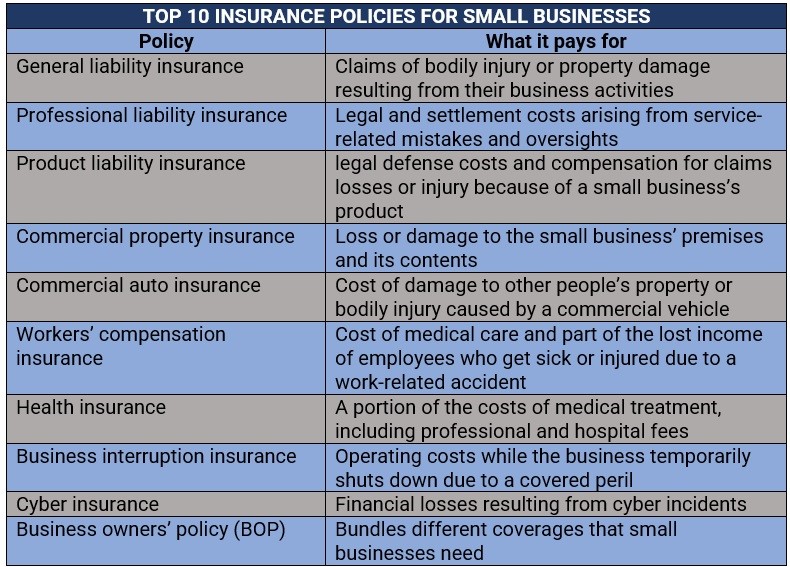
Did you know that 40% of small businesses will experience a property or liability loss in the next 10 years? If you’re a small business owner, you can’t afford to overlook insurance. But which types should you consider?
Small businesses have access to a variety of insurance options that cater to different needs. From protecting your physical premises to safeguarding against professional errors, the right insurance can save you from massive unexpected expenses.
General Liability vs. Professional Liability Insurance
Let’s start with the basics: General Liability Insurance. This is the foundation for many businesses, covering bodily injuries, property damage, and advertising injuries. Think of it as your business’s first line of defense.
But what about Professional Liability Insurance? This type of insurance, also known as Errors and Omissions (E&O) insurance, is crucial if you provide professional services. It covers claims related to negligence, misrepresentation, and inaccurate advice.
Here’s the deal: General liability protects you from physical risks, while professional liability focuses on risks related to your services. How do you decide which one you need? Check out the comparison table below.
| Type of Insurance | Coverage | Benefits |
|---|---|---|
| General Liability | Bodily injury, property damage, advertising injury | Protects physical assets and reputation |
| Professional Liability | Negligence, misrepresentation, service errors | Protects against financial loss from professional mistakes |
| Property Insurance | Damage to business property from fire, theft, etc. | Minimizes financial impact from property loss |
| Workers’ Compensation | Employee injuries or illnesses | Compliance with legal requirements; protects employees |
Determining Necessary Insurance Types by Industry
Choosing the right insurance can feel overwhelming. But here’s a straightforward method to narrow it down: identify the unique risks in your industry.
Are you in construction? Property and workers’ compensation insurance are essential. For IT consultants, focus on professional liability to cover potential advice mishaps.
- Analyze industry-specific risks.
- Consult with an insurance expert for tailored advice.
- Regularly review and update your policies as your business evolves.
Pro Tip: Always match your insurance coverage to the specific risks of your business sector!
Benefits of Having Small Business Insurance
Think your small business can survive without insurance? Think again. Statistics show that 40% of small businesses never reopen after a disaster.
Small business insurance isn’t just a “nice to have.” It’s a necessity. It protects you financially, keeps your business afloat during tough times, and can even save you from complete financial ruin.
Financial Protection
When disaster strikes, you don’t want to be caught off guard. Insurance offers you a financial safety net that can make the difference between closing shop and weathering the storm. Whether it’s a lawsuit or property damage, insurance ensures you don’t have to bear the brunt of unexpected costs. It’s like a financial shield that protects your hard-earned assets.
Risk Management and Business Continuity
Here’s the deal: running a business comes with risks. You could face lawsuits, damage from natural disasters, or employee injuries. But with insurance, you’re not navigating these risks alone. It helps you manage potential pitfalls and ensures business continuity. So, if something goes wrong, your business doesn’t come to a screeching halt.
Real-Life Scenarios
Let’s paint a picture. Imagine a fire damages your storefront. Without insurance, you could lose everything. But with it? You get funds to rebuild. Or think about a lawsuit from a customer slip-and-fall. Insurance covers legal fees, so you can focus on running your business instead of fighting in court.
Here are some additional benefits of having small business insurance:
- Peace of mind knowing you’re covered
- Enhanced credibility with clients and partners
- Employees feel secure, fostering better productivity
- Help in attracting investors by minimizing risk
Pro Tip: Always assess your business risks to choose the right insurance coverage. Not all policies are created equal!
Cost Factors Influencing Small Business Insurance

Why does small business insurance cost what it does? It’s not just a random number. Several crucial factors come into play.
You might ask yourself: “Is my business paying too much for insurance?” Let’s break down what impacts these costs and how you can save some cash.
Key Factors Affecting Insurance Costs
The size of your business, location, industry, and claims history significantly affect your insurance premiums. For instance, a construction company in a high-risk area will likely pay more than a small retail shop in a quiet suburb. The greater the perceived risk, the higher the cost.
But that’s not all. Your policy type, coverage limits, and deductibles also play a big role. Choose wisely, and you can optimize your expenses.
Cost-Saving Strategies
Here is the deal: You can cut costs without skimping on coverage. Start by bundling policies from the same provider. Insurance companies love it when you do this.
- Raise your deductibles: Higher deductibles mean lower premiums.
- Implement robust risk management practices to reduce claims.
- Shop around and compare quotes from multiple insurers.
- Regularly review your coverage needs to avoid over-insuring.
Pro Tip: Always ask for available discounts. Many insurers offer deals for being claims-free.
Cost Comparisons by Business Type and Size
Here’s a detailed cost comparison table for different business types and sizes. Use it to gauge where your business stands.
| Business Type | Small Business (1-10 employees) | Medium Business (11-50 employees) | Large Business (51-100 employees) |
|---|---|---|---|
| Retail | $500 – $1,000 | $1,500 – $2,500 | $3,000 – $4,000 |
| Construction | $1,000 – $2,000 | $3,000 – $5,000 | $6,000 – $8,000 |
| Professional Services | $600 – $1,200 | $1,800 – $3,000 | $3,500 – $5,000 |
| Food Service | $800 – $1,500 | $2,000 – $3,500 | $4,000 – $6,000 |
Balancing Coverage with Budget
Balancing your coverage needs with budget constraints can be tricky. You don’t want to be underinsured, but you also don’t want to break the bank.
Analyze which coverages are essential and which can be minimized. Understand that lower premiums often mean higher out-of-pocket costs in case of a claim.
Ultimately, the right balance is about assessing your business’s risk tolerance and financial capacity. Make informed decisions to protect your livelihood.
Legal and Regulatory Considerations
Did you know that over 40% of small businesses face penalties every year due to non-compliance with insurance regulations? Understanding the legal landscape is crucial for your business.
Here is the deal: different regions have different mandatory insurance requirements for small businesses. Ignoring these can lead to severe penalties. So, it’s vital to stay informed about the local laws where your business operates.
Legal Requirements Across Regions
Insurance laws vary drastically between states, provinces, and countries. In the U.S., most states require workers’ compensation insurance if you have employees. Meanwhile, in the UK, employers’ liability insurance is mandatory. You must know your region’s specific requirements to avoid hefty fines.
Consequences of Non-Compliance
Non-compliance isn’t just a slap on the wrist. It can lead to financial penalties, legal action, and even the suspension of your business license. Imagine running your business only to have it shut down due to a missing insurance policy. Don’t let that be you.
Ensuring Compliance with Local Regulations
Here’s how you can stay compliant: Start by researching your local insurance requirements. Contact a local insurance agent to guide you through the specific policies you need. Regularly review your policies as laws can change, and ensure you update your coverage accordingly.
Pro Tip: Keep a checklist to ensure nothing slips through the cracks. Here’s a simple step-by-step procedure:
- Identify your business location’s specific insurance requirements.
- List all types of mandatory insurance needed.
- Consult with a local insurance professional.
- Purchase the required policies.
- Review compliance annually.
Choosing the Right Insurance Provider
Did you know that 85% of businesses face financial hardship due to inadequate insurance? Choosing the right insurance provider can make or break your business in tough times. But how do you pick the right one?
Here is the deal: you need to evaluate providers based on specific criteria, compare their reputations, and negotiate your policy. Let’s dive in with a simple yet effective approach to ensure you’re covered without breaking the bank.
Criteria for Selecting an Insurance Provider
Step #1: Evaluate their financial stability. You don’t want to find out your provider can’t pay out when you need it most. Check their ratings with agencies like A.M. Best or Moody’s.
Step #2: Look at the range of products they offer. A provider with a broad portfolio can tailor policies to fit your unique needs.
Step #3: Consider their industry experience. Providers familiar with your industry understand the specific risks you face.
Comparing Reputations and Customer Service
A provider’s reputation can be a strong indicator of their reliability. Look for online reviews and testimonials, BUT don’t stop there. Chat with other business owners in your network.
Step #4: Evaluate their customer service. Try calling their support line with questions. You want quick, helpful responses, not endless hold music.
Pro Tip: Check for any complaints lodged against them with the Better Business Bureau or similar organizations.
Negotiating Terms and Policy Conditions
This is where you can save big bucks. Step #5: Don’t just accept the first quote—negotiate! Providers expect this, and there’s often room for better terms.
Many small business owners leave money on the table by not negotiating their insurance policies.
Ask about bundling discounts if you need multiple types of coverage. Step #6: Clarify all policy conditions to avoid surprise exclusions.
Questions to Ask Potential Insurance Providers
Before you sign on the dotted line, make sure you have these questions ready:
- What specific risks does this policy cover and exclude?
- How is the premium calculated, and what factors can increase it?
- Are there discounts for bundling policies or long-term contracts?
- What is the claims process, and how long does it typically take?
- Can I adjust my coverage as my business grows or changes?
Conclusion
In conclusion, arming your business with the right insurance isn’t just a smart move—it’s essential. From protecting finances to ensuring peace of mind, the benefits are undeniable. As you’ve seen, understanding and choosing the right 3 small business insurance types can mean the difference between survival and devastation. So, take a proactive step today, and let your business thrive with confidence. Until next time, stay insured and stay incredible!
FAQ Section
What are the essential types of small business insurance?
The essential types typically include general liability, professional liability, and property insurance, each covering different aspects of business risks.
How do I determine which insurance my small business needs?
Assess your industry risks, evaluate your business operations, and consult with an insurance advisor to tailor coverage to your specific needs.
How can small business insurance impact financial protection?
It offers a safety net against unexpected financial burdens from lawsuits, property damage, or professional errors, thus securing your business’s economic health.
What factors affect the cost of small business insurance?
Costs are influenced by business size, industry risk, coverage limits, location, and claims history. Comparing insurers can help find competitive rates.
What happens if my small business doesn’t comply with insurance regulations?
Non-compliance can lead to legal penalties, fines, and a lack of protection against potential claims, which could jeopardize your business’s future.
